
As a fabric manufacturing group, we are conscious of the intensity of our water footprint and responsibilities towards the sustainability of freshwater resources. We strive to gradually reduce the water withdrawn for our operations by focusing on re-using water and treating water discharged from our processes.
CEO Water Mandate
We rely heavily on water for our processes and consider it a precious resource. In 2021, we became the first textile and apparel manufacturer in the local industry to be a signatory to the UN Global Compact CEO Water Mandate and have adopted the Mandate’s Water Stewardship Framework in responding to water risks. Our key initiatives are highlighted below.
1. Direct Operations
- Conducted a comprehensive water audit by third party in 2021 to quantify and understand the water usage at factory premises.
- Set targets to reduce water intensity – 24.8% reduction by 2025. Baseline 2020/21.
- Implemented department wise water saving projects to meet targets.
- Performance monitored and reviewed by Management.
2. Supply Chain & Watershed Management
- Driving a sustainable supply chain by screening all dye and chemical suppliers for minimum ZDHC compliance.
- Hosted a virtual chemical management forum, Chemileys in July 2022 sharing best practice on chemical safety and compliance management.
3. Collective Action
- Engaging with national and international institutes towards water conservation.
- Collaboration with University of Sri Jayewardenepura and Industrial Technology Institute in effluent treatment plant improvement.
- Collaboration with the University of Peradeniya, University of Wayamba, and Central Environmental Authority to restore threatened Lagenandra Species in Kalutara district which contributes to protection of riverbanks.
4. Public Policy
- Abiding to both local and global rules and regulations on wastewater discharge.
- Includes compliance with the Environmental Protection License (EPL) and Schedule Waste License by the Central Environmental Authority and BOI respectively.
5. Community Engagement
- Providing potable water to chronic kidney disease affected families in Rathmalagahawewe, Anuradhapura.
- Conducting virtual and physical awareness sessions, social media campaigns and competitions to raise awareness on water sustainability among our employees and the general public.
6. Transparency
- Annual water footprint calculation and verification through third party.
- Regular customer audits.
- Awarding of NIKE water Green status on meeting stringent quality requirements is an affirmation of the high standards we aspire to.
Water Treatment Facility
Effluents discharged are treated at our effluent treatment plants which are continuously upgraded with the latest technology, prior to responsible discharge.
We persistently monitor the quality of the water discharged from our operations, and these continue to be within the parameters specified by the Central Environmental Authority.
Since 2017 we have been compliant with the zero discharge of hazardous chemicals (ZDHC) standard, reflecting our commitment to maintaining high standards. There were no instances of significant spills or water bodies affected by water discharge.
We have been awarded the GREEN status by NIKE since 2016, the highest rating for compliance with stringent NIKE Water Quality Guidelines under the NIKE Sustainable Water initiative.

Water Audit
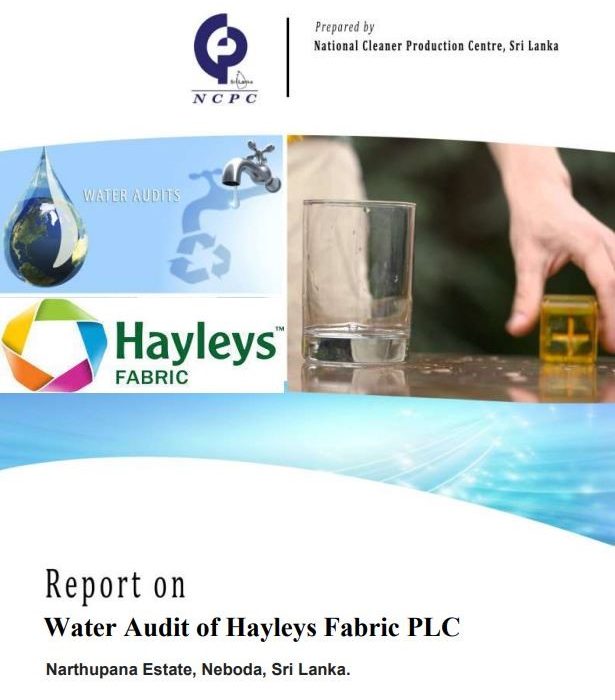
Conducted a comprehensive water audit, with the consultancy of a third party which identified significant users of water.
Water Footprint Verification
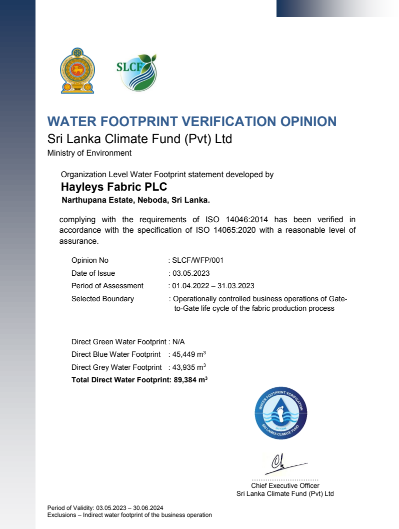
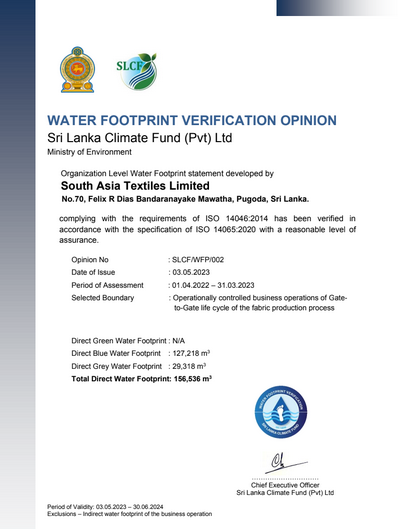
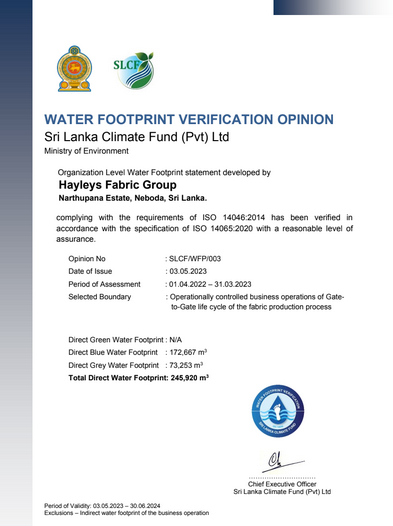
Our Water Footprint are calculated annually according to ISO 14046:2014 standard and verified by third party consultant, Sri Lanka Climate Fund.
Water Saving Projects
We are currently implementing department-specific water-saving projects as part of our ongoing efforts to achieve long-term goals for reducing water intensity. These initiatives are closely monitored to ensure their effectiveness.
- Investing in energy efficient production machinery.
- Reduce liquor ration in the dyeing process.
- Reduction of dye baths.
- Optimizing the raw water treatment process.
- Reduction of machine cleaning percentage by minimizing cleaning strips.
- Recycle machine cooling water up to 95%
- Water discharged from the treatment plant is recycled to produce steam in the boiler.